Why Your QA Team Needs an AI Strategy Now, Not Next Year
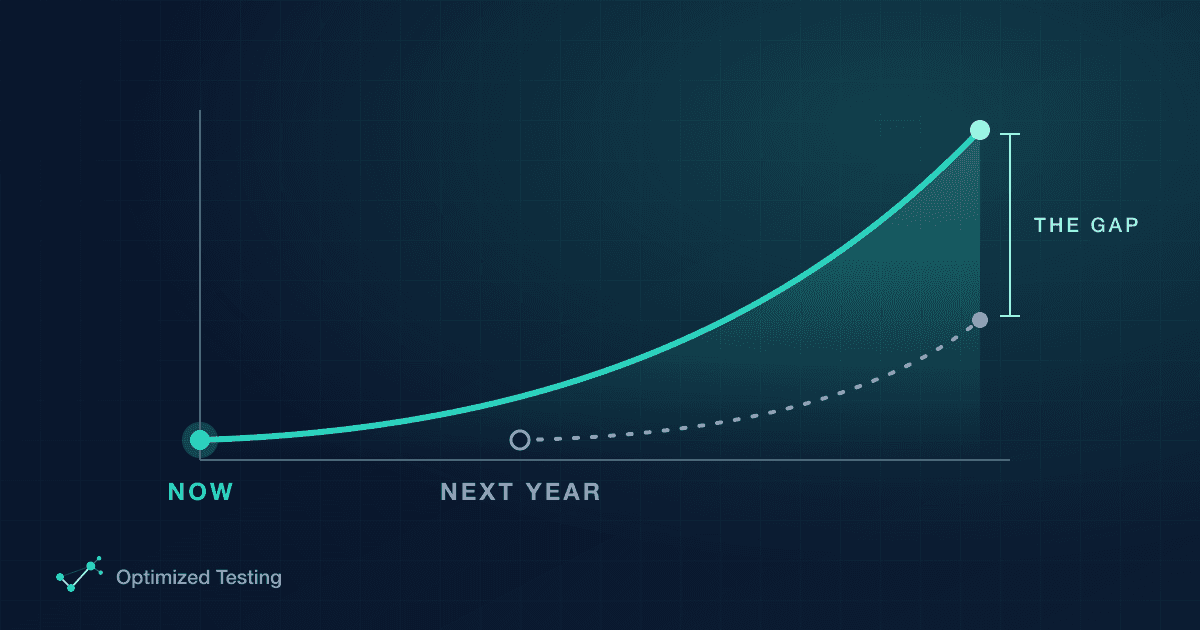
Every quarter you wait to bring AI into your testing process, the gap between you and your competitors widens — not because the technology changes that fast, but because the skills to use it well compound over time.
The real cost of waiting
Teams that started experimenting with AI-assisted test generation a year ago aren't just "a year ahead." They've built institutional knowledge: which prompts produce reliable test cases, how to review AI output for false confidence, where AI still needs a human in the loop, and how to measure the actual ROI.
That knowledge doesn't transfer from a blog post or a keynote. It's built through repetition, failure, and iteration — the same way any testing discipline matures.
Where AI actually helps today
- Test case generation from requirements, tickets, or existing specs
- Maintaining brittle end-to-end suites by having AI triage failures and suggest fixes
- Exploratory testing acceleration — using AI as a pairing partner to think through edge cases
- Documentation and reporting that used to eat hours of QA time every sprint
Where it doesn't (yet)
AI is not a replacement for testers who understand your domain, your users, and your risk tolerance. The teams getting the most value are the ones treating AI as a force multiplier for skilled testers — not a way to remove them from the loop.
Getting started without breaking anything
You don't need to overhaul your entire QA process in one sprint. Start with a single workflow — test case generation for one team, or triage for one flaky suite — measure the result, and expand from there.
If you want a structured way to do this, that's exactly what our assessment and workshop services are built for.
Want help putting this into practice?